Reductionism and the Interpretation of Paul
Why the Apostle Resists Sectarian Ownership

Introduction: Reductionism as an Interpretive Problem
Reductionism occurs when a complex intellectual or theological phenomenon is explained primarily through a single controlling idea while other dimensions are minimized or ignored. In Pauline studies, reductionism has often appeared when interpreters elevate one theme—such as justification, covenant identity, participation, or apocalyptic liberation—to the status of the organizing center of Paul’s theology.
Modern scholarship has repeatedly warned against this methodological danger. James D. G. Dunn argues that Paul’s thought reflects “a coherent but richly diverse theological vision,” one that cannot be reduced to a single doctrinal formula.¹ Similarly, John M. G. Barclay notes that Paul’s theology of grace involves multiple dimensions—what he calls different “perfections of grace”—each emphasizing a distinct aspect of God’s gift.²
At the same time, scholars associated with the traditional Protestant interpretation have emphasized the centrality of justification. For example, Douglas J. Moo argues that justification by faith represents “the central soteriological affirmation of Paul’s gospel.”³
These perspectives reveal an important tension in Pauline interpretation. While each highlights an authentic dimension of Paul’s theology, the elevation of any single theme risks reducing Paul’s message to a narrower doctrinal framework.
Yet Paul himself repeatedly resisted attempts to reduce the gospel to sectarian categories.
Paul’s Refusal of Sectarian Reduction
Several passages demonstrate Paul’s resistance to the reduction of the gospel into factional or ideological positions.
1 Corinthians 1:12–13 — The Rejection of Party Allegiance
“Each of you says, ‘I follow Paul,’ or ‘I follow Apollos,’ or ‘I follow Cephas,’ or ‘I follow Christ.’ Is Christ divided?” (1 Cor 1:12–13)
In this passage Paul confronts divisions within the Corinthian church. Some believers attempted to identify themselves with particular apostolic figures, effectively forming theological factions.
Paul’s response is remarkable: he refuses to allow even his own name to become the basis of a sectarian identity. The rhetorical question “Is Christ divided?” exposes the fundamental error of reducing the gospel to allegiance to a particular teacher.
The implication is clear: the gospel cannot be owned by any theological party.
Galatians 1:6–9 — The Defense of the Gospel’s Integrity
“If anyone is preaching to you a gospel contrary to the one you received, let him be accursed.” (Gal 1:9)
In Galatians Paul confronts teachers who insisted that Gentile believers must adopt key elements of the Mosaic law. While Paul firmly rejects this teaching, his concern is not merely about ritual practice but about the distortion of the gospel itself.
Paul therefore refuses to allow the gospel to be absorbed into a religious system that restricts access to God’s covenant promises.
Romans 3:27–30 — The Elimination of Religious Boasting
“Where then is boasting? It is excluded.” (Rom 3:27)
Paul’s argument in Romans dismantles every ground for religious superiority—whether Jewish or Gentile.
As Thomas R. Schreiner notes, Paul’s logic here underscores the existence of a certain degree of the universal nature of sin and the necessity of divine grace for all humanity.⁴
The theological implication is that the gospel eliminates any claim to religious privilege.
Galatians 3:28 — The New Identity in Christ
“There is neither Jew nor Greek, slave nor free, male nor female; for you are all one in Christ Jesus.”
Paul’s vision transcends ethnic, social, and cultural boundaries. The defining identity of the Christian community is participation in Christ rather than allegiance to any theological tradition.
Reductionist Appropriations of Paul
Despite Paul’s resistance to sectarian appropriation, later Christian traditions have often interpreted Paul through particular doctrinal frameworks.
These frameworks frequently emerged in response to historical controversies.
The Augustinian Emphasis on Original Sin
The theology of Augustine of Hippo profoundly shaped Western interpretations of Paul.
Reading Romans—especially Romans 5 and 7—Augustine developed the doctrine of original sin and the bondage of the human will. In Augustine’s interpretation, Paul reveals humanity’s radical dependence on divine grace for salvation.
This reading profoundly influenced Western Christianity, though critics argue that it sometimes places disproportionate emphasis on inherited guilt.
The Lutheran Emphasis on Justification
The Reformation interpretation of Paul, particularly through Martin Luther, centered on justification by faith apart from works.
Luther’s reading emerged during debates with late medieval Catholic theology. Consequently, Paul’s critique of “works of the law” was interpreted primarily as a rejection of human attempts to earn salvation.
While Luther’s interpretation highlighted the importance of grace, scholars have questioned whether this reading reflects the historical context of Paul’s dispute with Judaism.
The Reformed Emphasis on Divine Sovereignty
John Calvin further developed the Reformation interpretation by emphasizing God’s sovereign election, particularly in passages such as Romans 9.
Calvin’s reading helped shape the Reformed tradition’s doctrine of predestination. Yet some scholars argue that this emphasis can overshadow other Pauline themes, including participation in Christ and the corporate identity of the church.
The Old Perspective in Modern Scholarship
Contemporary defenders of the traditional Protestant interpretation continue to emphasize the forensic nature of justification.
For example, Douglas J. Moo and Thomas R. Schreiner argue that Paul’s central concern is humanity’s inability to achieve righteousness before God through obedience to the law.
This perspective preserves the Reformation emphasis on grace but has been criticized for underemphasizing the historical context of Second Temple Judaism.
The New Perspective on Paul
The New Perspective emerged in the late twentieth century through the work of scholars such as E. P. Sanders, James D. G. Dunn, and N. T. Wright.
These scholars argued that Second Temple Judaism functioned within a framework of divine grace rather than works-based legalism.
Consequently, Paul’s critique of “works of the law” was interpreted primarily as a rejection of ethnic boundary markers that excluded Gentiles from the covenant community.
This insight significantly reshaped Pauline scholarship, though critics argue that some versions of the New Perspective risk minimizing Paul’s emphasis on universal sin and justification.
The Persistent Challenge of Pauline Interpretation
The history of Pauline interpretation reveals a recurring pattern. Each theological tradition highlights genuine insights within Paul’s letters while simultaneously narrowing their scope.
Paul’s theology cannot be reduced to a single doctrinal theme.
His writings address multiple dimensions of salvation:
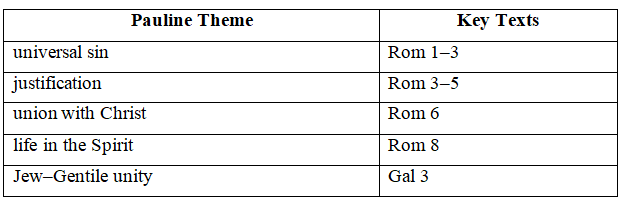
As Stephen Westerholm observes, the debate between traditional and New Perspective interpreters often reflects different emphases rather than mutually exclusive interpretations.⁵
Conclusion
Reductionism remains one of the most persistent challenges in Pauline interpretation. From Augustine to the Reformers and into modern scholarship, interpreters have frequently attempted to explain Paul through a single doctrinal lens.
Yet Paul’s own writings resist such simplification. His theology integrates multiple dimensions—legal, participatory, covenantal, and cosmic—into a unified vision of God’s redemptive work in Christ.
The task of contemporary interpreters is therefore not to claim Paul for a particular theological tradition but to allow the full complexity of his writings to shape our understanding of the gospel.
Notes
James D. G. Dunn, The Theology of Paul the Apostle (Grand Rapids: Eerdmans, 1998), 17–20.
John M. G. Barclay, Paul and the Gift (Grand Rapids: Eerdmans, 2015), 70–75.
Douglas J. Moo, The Epistle to the Romans (Grand Rapids: Eerdmans, 1996), 71–74.
Thomas R. Schreiner, Romans (Grand Rapids: Baker Academic, 1998), 179–181.
Stephen Westerholm, Perspectives Old and New on Paul (Grand Rapids: Eerdmans, 2004), 440–445.